
Scorpion molt in my kitchen
this morning.
This probably means I have a tiny house guest.
This probably means I have a tiny house guest.

A
new sign on a new stretch of road.
Ambiguous headline from
yesterday:
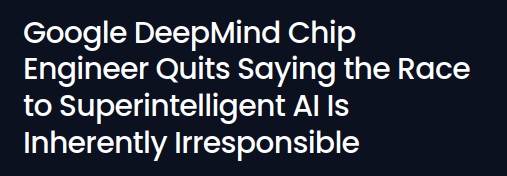 No one listened so he quit saying it.
No one listened so he quit saying it.
Terence Tao,
concerned
about wanton use of AI to solve open math problems:
It may become necessary to declare certain classes of mathematical problems off‑limits to automated solvers, in order to preserve their broader value to the mathematical ecosystem (for instance, through the training of future mathematicians). Admittedly this can be hard to enforce when such tools are both powerful and widely available. But then again, society has been somewhat successful at using social pressure to discourage, say, widespread spoiling of upcoming movies.Yeah but most people are on board with the idea of not spoiling movies. There is less consensus about how and when to restrict AI.
From southern California:
pic
of an actual coyote having caught a roadrunner.

Some of my favorite short stories are told from the point of view
of what I'd call a clueless narrator.
In one story, the narrator thinks a friend of his is preoccupied with trivial matters when in fact the friend is quietly aware of something important and uses his knowledge to take advantage of the narrator.
At least, that's how I read the story. The way that the friend's insight is only implied is part of what I love about the story. Show, don't tell.
An exegesis I read yesterday zeroes in on the passage where all that is happening but doesn't say a word about the implication that I think is key to why the story is so great.
When I try to imply things in my own writing, it's often hard for me to know whether I'm being so indirect that readers will miss the point or whether I'm spelling it out too clearly.
In one story, the narrator thinks a friend of his is preoccupied with trivial matters when in fact the friend is quietly aware of something important and uses his knowledge to take advantage of the narrator.
At least, that's how I read the story. The way that the friend's insight is only implied is part of what I love about the story. Show, don't tell.
An exegesis I read yesterday zeroes in on the passage where all that is happening but doesn't say a word about the implication that I think is key to why the story is so great.
When I try to imply things in my own writing, it's often hard for me to know whether I'm being so indirect that readers will miss the point or whether I'm spelling it out too clearly.
I almost ran over a rattlesnake while bike riding yesterday.
Later in the ride a small pack of coyotes crossed
the road in front of me. I like seeing wildlife when
I'm out riding.
I went riding again today and I passed by a few cows: not wildlife but a reason to say moo even though they never say it back.
Later in the ride I came upon this: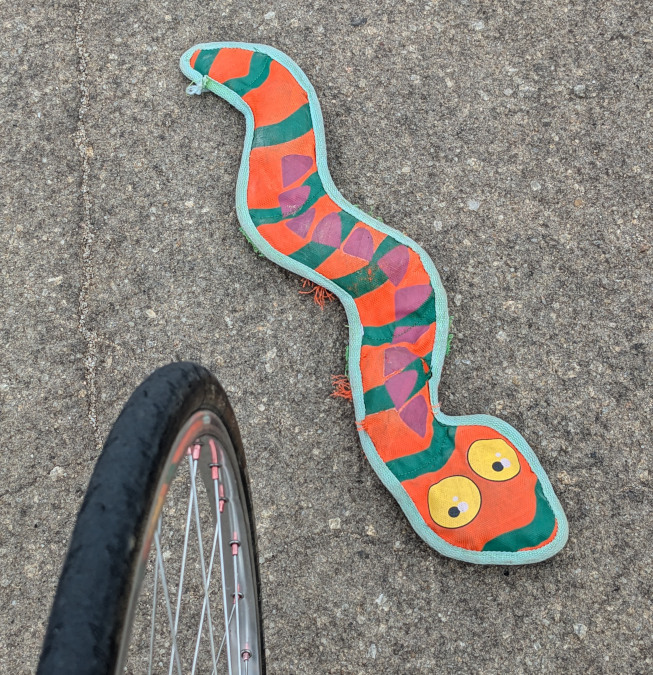 Also not wildlife but a snake on the road two days in a row is spooky.
I went riding again today and I passed by a few cows: not wildlife but a reason to say moo even though they never say it back.
Later in the ride I came upon this:
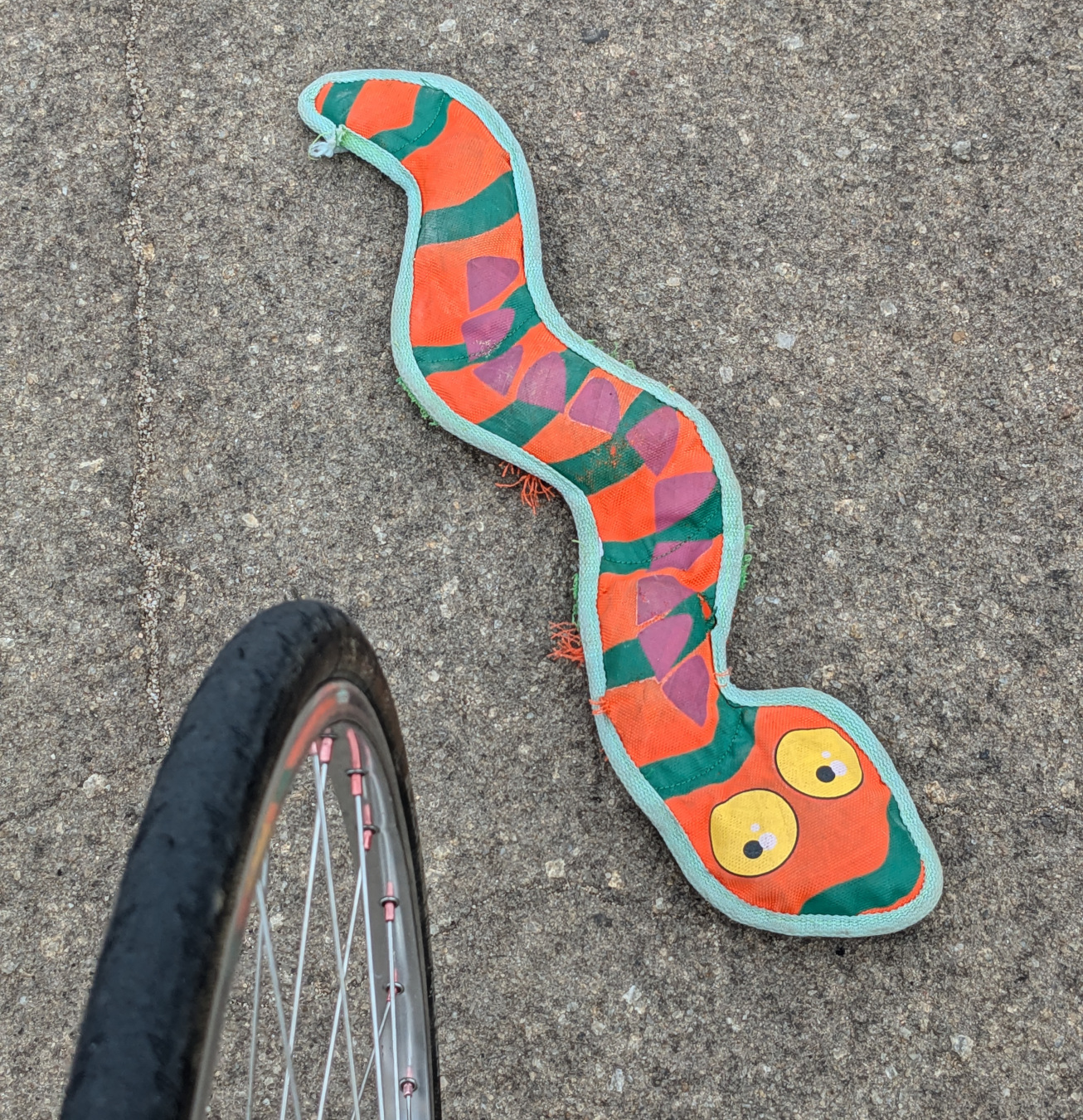 Also not wildlife but a snake on the road two days in a row is spooky.
Snake-in-the-Box was probably the best math problem I'll ever find.
I encountered it at a moment when there was still progress to
be made that was within my reach. I had great fun working on it.
I was feeling urgency to get more results before anyone brought AI to bear on the problem. I didn't know when that day would come but I figured it was inevitable.
Last month, a team of 10 people published Snake-in-the-Box results significantly exceeding what I had been able to achieve. They didn't (yet) say how they did it but it's likely AI played a big role. I probably can't compete anymore.
I'm not alone in this regard. AI is making inroads in various areas of mathematics. People way more skilled than I are being outdone by AI.
It's time for me to turn my attention to something else, which won't feel the same. I've come to have a certain affection for the Snake-in-the-Box problem.
It's like I'm a teenage boy who's had his heart broken, my mom is telling me there are other fish in the sea, and I want to roll my eyes and say, "Mom, girls are not fungible."
I was feeling urgency to get more results before anyone brought AI to bear on the problem. I didn't know when that day would come but I figured it was inevitable.
Last month, a team of 10 people published Snake-in-the-Box results significantly exceeding what I had been able to achieve. They didn't (yet) say how they did it but it's likely AI played a big role. I probably can't compete anymore.
I'm not alone in this regard. AI is making inroads in various areas of mathematics. People way more skilled than I are being outdone by AI.
It's time for me to turn my attention to something else, which won't feel the same. I've come to have a certain affection for the Snake-in-the-Box problem.
It's like I'm a teenage boy who's had his heart broken, my mom is telling me there are other fish in the sea, and I want to roll my eyes and say, "Mom, girls are not fungible."